Buy stock24.eu ?
We are moving the project
stock24.eu .
Are you interested in purchasing the domain
stock24.eu ?
domain@kv-gmbh.de · 0541-91531010
Buy stock24.eu ?
What are polygons?
Polygons are two-dimensional shapes that are made up of straight lines and enclosed by a set of vertices. They can have any number of sides, but must have at least three. Common examples of polygons include triangles, squares, rectangles, pentagons, hexagons, and octagons. Polygons are used in various mathematical and geometric applications, and are fundamental to understanding the properties of shapes and their relationships. **
What are triangles and polygons?
Triangles are three-sided polygons, while polygons are closed shapes with straight sides. Triangles are a specific type of polygon with three sides and three angles. Polygons can have any number of sides, as long as they are straight and the shape is closed. Both triangles and polygons are fundamental shapes in geometry and are used to study the properties of angles, sides, and area. **

Similar search terms for Polygons
Top-Angebote
Products related to Polygons:
-
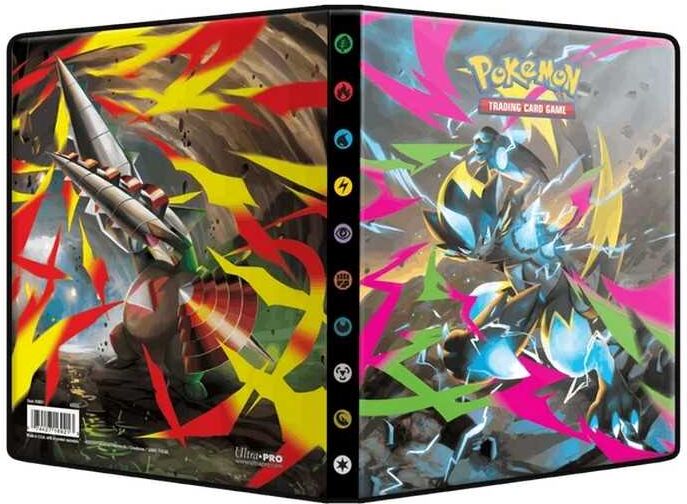
Ultra PRO Pokémon Mega Evolution – Pitch Black 4-Pocket Portfolio for Trading Card CollectorsOrganize and protect your Pokémon trading card collection with this Pitch Black 4-Pocket Portfolio from Ultra PRO. The cover features full-art Mega Evolution artwork, with Mega Zeraora on the front and Mega Excadrill on the back. Inside, you'll find archival-safe pages designed to hold standard-sized trading cards. Each pocket can store one card for a total capacity of up to 40 cards, or two cards back-to-back for up to 80 cards. Additional central pages provide space for up to four oversized Pokémon cards, making this portfolio suitable for collectors who enjoy displaying and storing cards from different parts of their collection.11,49 £*Shipping: 3,95 £Secure redirect to the provider
-
Ultra Pro Pokémon TCG Lillie ; Clefairy 9-Pocket Portfolio for Trading Card Game Collectors and PlayersOrganise and protect your Pokémon cards with the Lillie ; Clefairy 9-Pocket Portfolio from Ultra Pro. Its full-art cover features Lillie and Clefairy, making it a colourful choice for collectors and players. Inside are 9 clear, 9-pocket pages designed for standard-size trading cards. The portfolio holds up to 180 double-sleeved cards, helping you sort cards by set, deck or favourite Pokémon while keeping them easy to view. This portfolio is made for collecting and is an official Pokémon Trading Card Game accessory. It features an archival-safe, acid-free and non-PVC page material, suitable for standard-size trading cards. A practical portfolio for storing and showing off Pokémon TCG cards at home or when taking a collection to a game session.10,06 £*Shipping: 3,95 £Secure redirect to the provider
-
Pokémon: Pikachu 4-Pocket Portfolio for Trading Cards by Ultra PRO - Holds 80 Standard-Size CardsOrganize and protect your Pokémon trading card collection with this Pikachu 4-Pocket Portfolio from Ultra PRO. The portfolio features a colorful full-art Pikachu cover and is designed for standard-size trading cards. Its archival-safe polypropylene pages help protect cards during storage and display. The portfolio holds up to 80 standard-size cards when the pockets are double-loaded, making it suitable for building, sorting, and carrying a growing collection. Additional centre pages provide space for up to four oversized Pokémon cards.7,46 £*Shipping: 3,95 £Secure redirect to the provider
-
Pokémon: Mega Charizard X and Mega Charizard Y 9-Pocket Portfolio, Ultra PRO, Trading Card StorageOrganize and protect your Pokémon Trading Card Game collection with this Ultra PRO 9-pocket portfolio featuring vibrant artwork of Mega Charizard X and Mega Charizard Y. The portfolio's full-art cover brings these powerful Pokémon to your collection while providing a practical way to store standard-size trading cards. It contains 10 archival-safe pages, with nine side-loading pockets on each page, offering space for up to 180 cards. This makes it suitable for displaying favourite cards, organizing themed collections, or storing cards safely between games. The official Pokémon Trading Card Game portfolio design ensures a compact, clearly organized storage solution for your trading card collection. Cards are not included. This portfolio is designed for collectors and players who want a convenient storage solution for their trading cards.10,59 £*Shipping: 3,95 £Secure redirect to the provider


-
How can I reduce further polygons?
To reduce further polygons, you can try simplifying the geometry by removing unnecessary vertices or edges. This can be done by using tools like the simplify function in modeling software or manually editing the mesh to remove unnecessary details. Additionally, you can try using techniques like retopology to create a cleaner and more optimized mesh with fewer polygons. Finally, consider using LOD (Level of Detail) techniques to dynamically adjust the level of detail based on the distance of the object from the camera, reducing the number of polygons rendered at a given time. **
-
How can I further reduce polygons?
You can further reduce polygons by using tools such as the "Decimate" modifier in 3D modeling software, which allows you to reduce the number of polygons while preserving the overall shape of the model. Additionally, you can manually optimize the topology of the model by merging vertices, removing unnecessary edge loops, and simplifying complex geometry. Another approach is to use automated retopology tools to create a lower-polygon version of the model while maintaining its overall structure and details. **
-
What are polygons in video games?
Polygons in video games are the building blocks of 3D graphics. They are flat, two-dimensional shapes that are used to create the surfaces of 3D objects in the game world. These polygons are connected to form the overall shape of the object, and then textures and lighting are applied to give them a more realistic appearance. The more polygons used, the more detailed and complex the 3D models can be, but this also requires more processing power from the computer or gaming console. **
-
How do you calculate regular polygons?
To calculate the area of a regular polygon, you can use the formula: Area = (1/2) * apothem * perimeter, where the apothem is the distance from the center of the polygon to the midpoint of any side, and the perimeter is the total length of all the sides. To calculate the interior angle of a regular polygon, you can use the formula: Interior angle = (180 * (n - 2)) / n, where n is the number of sides. Finally, to calculate the exterior angle of a regular polygon, you can use the formula: Exterior angle = 360 / n, where n is the number of sides. **


Does a subdivision surface create more polygons?
Yes, a subdivision surface does create more polygons. When a subdivision surface is applied to a model, it increases the number of polygons by subdividing the existing geometry and creating a smoother surface. This can result in a higher level of detail and a more organic shape, but it also increases the complexity of the model and can impact performance in some cases. **
How do you calculate polygons in math?
To calculate the area of a polygon in math, you can use the formula A = 1/2 * base * height for a triangle, A = length * width for a rectangle, or A = 1/2 * apothem * perimeter for a regular polygon. For irregular polygons, you can divide the shape into smaller, simpler shapes and calculate their individual areas, then sum them up to find the total area of the polygon. Additionally, you can use trigonometric functions to calculate the area of a polygon with known side lengths and angles. **
Top-Angebote
Products related to Polygons:
-
Ultra PRO Pokémon: Bulbasaur 9-Pocket Portfolio for Trading Card Game CollectorsOrganise your favourite trading cards with this Pokémon portfolio featuring Bulbasaur on the cover. Designed for collectors and players, it provides a practical way to store cards neatly while reducing handling and everyday wear. The portfolio includes nine-pocket pages arranged for clear card visibility and straightforward sorting. Each page can hold cards securely, making it easier to arrange collections by set, character, type, or personal preference. The compact portfolio format is suitable for shelf or collection storage, and its themed cover makes it a great addition to any collection. This official Ultra PRO Pokémon accessory is perfect for storing and displaying your Pokémon Trading Card Game collection.11,69 £*Shipping: 3,95 £Secure redirect to the provider
-
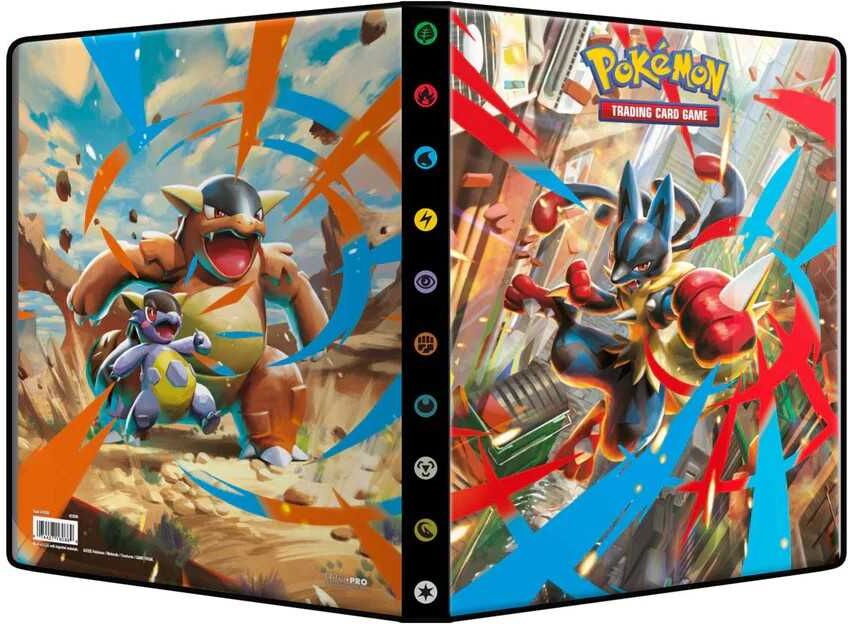
Pokémon Mega Evolution 9-Pocket Portfolio for Trading Card Game Collectors - Ultra PROProtect your Pokémon Trading Card Game collection with this officially licensed 9-pocket portfolio from Ultra PRO. The cover features Mega Lucario, while the reverse shows Mega Kangaskhan, giving the portfolio a distinctive Mega Evolution design. Inside, you'll find 14 clear polypropylene pages, arranged to hold standard-size trading cards securely. Cards can be stored single-loaded, with one card in each pocket, or double-loaded, with cards placed back-to-back, providing space for up to 126 cards single-loaded or 252 cards double-loaded. The portfolio is designed to be archival-safe, acid-free, and non-PVC, making it perfect for storing and displaying your collection at home or while traveling.12,06 £*Shipping: 3,95 £Secure redirect to the provider
-
Ultra PRO Pokémon Mega Evolution – Pitch Black 4-Pocket Portfolio for Trading Card CollectorsOrganize and protect your Pokémon trading card collection with this Pitch Black 4-Pocket Portfolio from Ultra PRO. The cover features full-art Mega Evolution artwork, with Mega Zeraora on the front and Mega Excadrill on the back. Inside, you'll find archival-safe pages designed to hold standard-sized trading cards. Each pocket can store one card for a total capacity of up to 40 cards, or two cards back-to-back for up to 80 cards. Additional central pages provide space for up to four oversized Pokémon cards, making this portfolio suitable for collectors who enjoy displaying and storing cards from different parts of their collection.11,49 £*Shipping: 3,95 £Secure redirect to the provider
-
Ultra Pro Pokémon TCG Lillie ; Clefairy 9-Pocket Portfolio for Trading Card Game Collectors and PlayersOrganise and protect your Pokémon cards with the Lillie ; Clefairy 9-Pocket Portfolio from Ultra Pro. Its full-art cover features Lillie and Clefairy, making it a colourful choice for collectors and players. Inside are 9 clear, 9-pocket pages designed for standard-size trading cards. The portfolio holds up to 180 double-sleeved cards, helping you sort cards by set, deck or favourite Pokémon while keeping them easy to view. This portfolio is made for collecting and is an official Pokémon Trading Card Game accessory. It features an archival-safe, acid-free and non-PVC page material, suitable for standard-size trading cards. A practical portfolio for storing and showing off Pokémon TCG cards at home or when taking a collection to a game session.10,06 £*Shipping: 3,95 £Secure redirect to the provider
-
What are polygons?
Polygons are two-dimensional shapes that are made up of straight lines and enclosed by a set of vertices. They can have any number of sides, but must have at least three. Common examples of polygons include triangles, squares, rectangles, pentagons, hexagons, and octagons. Polygons are used in various mathematical and geometric applications, and are fundamental to understanding the properties of shapes and their relationships. **
-
What are triangles and polygons?
Triangles are three-sided polygons, while polygons are closed shapes with straight sides. Triangles are a specific type of polygon with three sides and three angles. Polygons can have any number of sides, as long as they are straight and the shape is closed. Both triangles and polygons are fundamental shapes in geometry and are used to study the properties of angles, sides, and area. **
-
How can I reduce further polygons?
To reduce further polygons, you can try simplifying the geometry by removing unnecessary vertices or edges. This can be done by using tools like the simplify function in modeling software or manually editing the mesh to remove unnecessary details. Additionally, you can try using techniques like retopology to create a cleaner and more optimized mesh with fewer polygons. Finally, consider using LOD (Level of Detail) techniques to dynamically adjust the level of detail based on the distance of the object from the camera, reducing the number of polygons rendered at a given time. **
-
How can I further reduce polygons?
You can further reduce polygons by using tools such as the "Decimate" modifier in 3D modeling software, which allows you to reduce the number of polygons while preserving the overall shape of the model. Additionally, you can manually optimize the topology of the model by merging vertices, removing unnecessary edge loops, and simplifying complex geometry. Another approach is to use automated retopology tools to create a lower-polygon version of the model while maintaining its overall structure and details. **
Similar search terms for Polygons
-
Pokémon: Pikachu 4-Pocket Portfolio for Trading Cards by Ultra PRO - Holds 80 Standard-Size CardsOrganize and protect your Pokémon trading card collection with this Pikachu 4-Pocket Portfolio from Ultra PRO. The portfolio features a colorful full-art Pikachu cover and is designed for standard-size trading cards. Its archival-safe polypropylene pages help protect cards during storage and display. The portfolio holds up to 80 standard-size cards when the pockets are double-loaded, making it suitable for building, sorting, and carrying a growing collection. Additional centre pages provide space for up to four oversized Pokémon cards.7,46 £*Shipping: 3,95 £Secure redirect to the provider
-
Pokémon: Mega Charizard X and Mega Charizard Y 9-Pocket Portfolio, Ultra PRO, Trading Card StorageOrganize and protect your Pokémon Trading Card Game collection with this Ultra PRO 9-pocket portfolio featuring vibrant artwork of Mega Charizard X and Mega Charizard Y. The portfolio's full-art cover brings these powerful Pokémon to your collection while providing a practical way to store standard-size trading cards. It contains 10 archival-safe pages, with nine side-loading pockets on each page, offering space for up to 180 cards. This makes it suitable for displaying favourite cards, organizing themed collections, or storing cards safely between games. The official Pokémon Trading Card Game portfolio design ensures a compact, clearly organized storage solution for your trading card collection. Cards are not included. This portfolio is designed for collectors and players who want a convenient storage solution for their trading cards.10,59 £*Shipping: 3,95 £Secure redirect to the provider
-
Ultra PRO 9-Pocket Pokémon Trading Card Portfolio, Mega Darkrai and Mega Chandelure Design, Archival-Safe StorageStore and protect your Pokémon trading card collection with this Ultra PRO 9-pocket portfolio from the Mega Evolution range. The cover features a full-art Mega Darkrai design, while the reverse shows Mega Chandelure for a distinctive finish on both sides. The portfolio's archival-safe pages provide space for standard-size trading cards, helping keep them organized and protected during storage or display. It can hold up to 126 cards when cards are placed in single-loaded pockets, or up to 252 cards when using both sides of the pages. This portfolio is a practical choice for collectors who want to organize, display, and safeguard a growing Pokémon card collection.14,29 £*Shipping: 3,95 £Secure redirect to the provider
-
Pokémon Mega Evolution 2.5 Ascended Heroes 9-Pocket Portfolio for Trading Cards, Holds 126-252 Cards, Ultra PROProtect and organise your Pokémon cards with the Pokémon Mega Evolution 2.5 Ascended Heroes 9-Pocket Portfolio from Ultra PRO. Its vibrant full-art cover features Mega Dragonite, Mega Charizard, Mega Lucario, Mewtwo, Ho-Oh and Stellar-type Terastallised Pikachu. The portfolio contains archival-safe nine-pocket pages designed for standard-sized trading cards. Cards can be stored single-loaded for a capacity of up to 126 cards, or double-loaded to hold up to 252 cards. This provides a practical way to keep your collection organised and protected during storage.10,99 £*Shipping: 3,95 £Secure redirect to the provider
-
What are polygons in video games?
Polygons in video games are the building blocks of 3D graphics. They are flat, two-dimensional shapes that are used to create the surfaces of 3D objects in the game world. These polygons are connected to form the overall shape of the object, and then textures and lighting are applied to give them a more realistic appearance. The more polygons used, the more detailed and complex the 3D models can be, but this also requires more processing power from the computer or gaming console. **
-
How do you calculate regular polygons?
To calculate the area of a regular polygon, you can use the formula: Area = (1/2) * apothem * perimeter, where the apothem is the distance from the center of the polygon to the midpoint of any side, and the perimeter is the total length of all the sides. To calculate the interior angle of a regular polygon, you can use the formula: Interior angle = (180 * (n - 2)) / n, where n is the number of sides. Finally, to calculate the exterior angle of a regular polygon, you can use the formula: Exterior angle = 360 / n, where n is the number of sides. **
-
Does a subdivision surface create more polygons?
Yes, a subdivision surface does create more polygons. When a subdivision surface is applied to a model, it increases the number of polygons by subdividing the existing geometry and creating a smoother surface. This can result in a higher level of detail and a more organic shape, but it also increases the complexity of the model and can impact performance in some cases. **
-
How do you calculate polygons in math?
To calculate the area of a polygon in math, you can use the formula A = 1/2 * base * height for a triangle, A = length * width for a rectangle, or A = 1/2 * apothem * perimeter for a regular polygon. For irregular polygons, you can divide the shape into smaller, simpler shapes and calculate their individual areas, then sum them up to find the total area of the polygon. Additionally, you can use trigonometric functions to calculate the area of a polygon with known side lengths and angles. **
* All prices are inclusive of VAT and, if applicable, plus shipping costs. The offer information is based on the details provided by the respective shop and is updated through automated processes. Real-time updates do not occur, so deviations can occur in individual cases. ** Note: Parts of this content were created by AI.